On this page
Can chess help children with ADHD? An honest look at the executive-function link, practical session tweaks, and what parents can realistically expect.
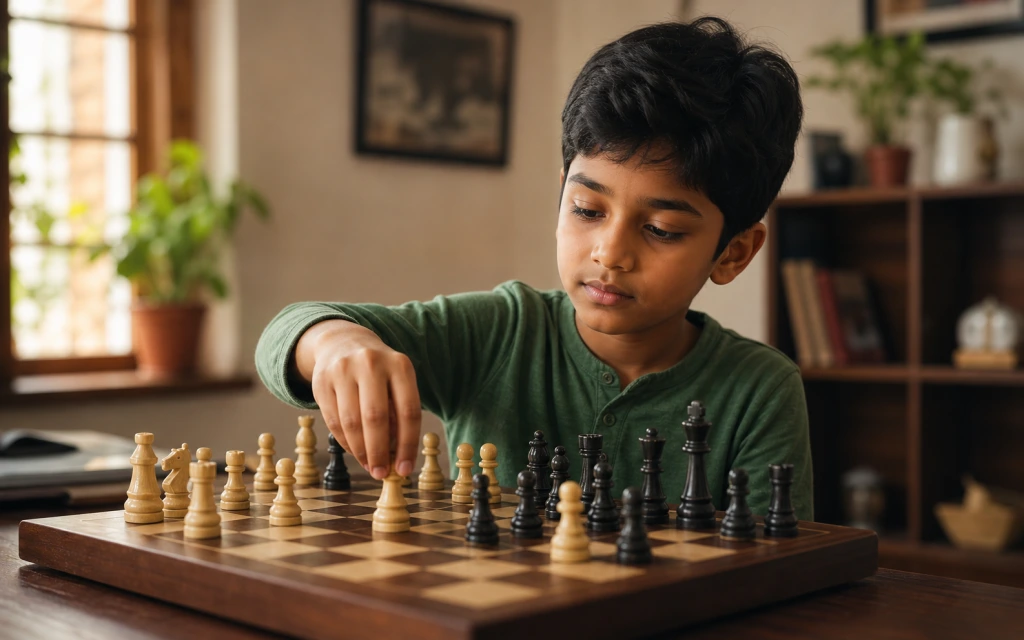
Chess for Kids with ADHD: What Parents Need to Know#
By Coach Aryan Pal · FIDE-rated coach (1780) · Last updated 16 July 2026
Chess is not a treatment for ADHD. What it can be, for some children, is a structured game that gives repeated, enjoyable practice at the exact skills ADHD makes harder: holding attention, pausing before acting, and planning a few steps ahead. It helps some kids a lot, some a little, and a few not at all. This guide explains the honest version, and how to set a child up so the game works with their attention rather than against it.
If your child has been diagnosed with ADHD, the treatment plan should be led by a qualified doctor or psychologist. Chess is, at most, a supporting activity that sits alongside proper care. I coach ChessWize’s youngest and most restless beginners, and a fair number of them are easily distracted or have an ADHD diagnosis. My observations below are honest patterns from live online coaching, not clinical claims.
The executive-function connection#
ADHD is largely a difference in executive function: the set of processes that includes attention control, working memory, impulse regulation, and cognitive flexibility. Those are also the skills a chess game keeps asking for. That overlap is why chess keeps coming up in conversations about supporting kids with attention difficulties.
When a child sits down to play, the game quietly demands that they:
- Hold attention on one board for anywhere from a few minutes to half an hour.
- Inhibit the first impulse instead of grabbing the move they saw first.
- Keep positions in working memory while they picture the next move or two.
- Change plans when the opponent does something they did not expect.
For a child with ADHD, each of those is a direct pull on their weakest muscle. That is the whole tension of chess for these learners: it offers concentrated reps in exactly the areas they find hard, but it also asks for the hard thing right away. Handled well, that is useful practice. Handled badly, it is a fast route to frustration.
What the research actually says#
The honest answer is that the evidence base is thin. There are a handful of small studies exploring chess as a complementary activity for children with ADHD, and the general direction is encouraging, but sample sizes are small and the findings are not conclusive. Reputable overviews of ADHD and executive function from Understood and clinical summaries from the CDC and the NHS are clear that ADHD support rests on medication, behavioural therapy and structured routines. Nothing I have read supports chess as a stand-alone intervention, and I would not present it as one.
A few points I hold onto, stated carefully:
- Structured, coached practice seems more useful than casual app play for building attention habits. A child clicking through blitz games at speed is exercising the opposite of what we want.
- Whatever benefit exists is complementary. Chess does not do what treatment does; at best it reinforces skills a child is already working on elsewhere.
- We cannot promise a specific outcome, and I never do. Two children with the same diagnosis can respond very differently.
What I see in my most distractible students#
From coaching restless young beginners online, here are the patterns that repeat.
The first month is the hardest. Distractible kids often struggle badly in the first three or four sessions. They want to move fast, dislike being asked to think first, and get frustrated quickly. Many parents see that and consider stopping. I ask families to commit to about eight sessions before judging. The settling-in period is real, and for most children it passes.
Short and frequent beats long and rare. A focused 25–30 minute lesson twice a week does more than a single hour once a week. Attention fatigue arrives faster for these learners, and pushing through it just teaches them that chess feels like a chore. I build in a two-minute break around the fifteen-minute mark: a stretch, a quick chat, a fun puzzle, then back to the lesson.
Puzzles hold attention better than full games at first. Short tactical puzzles give a fresh challenge, instant feedback and a clear finish every 30 seconds. For the first six to eight weeks I lean on puzzles far more than full games, using free level-adjusting sets on Lichess or Chess.com. You can read how I structure that daily in chess practice for kids at home.
Feedback has to be immediate. If I save all my comments for the post-game review, a distractible child has already forgotten what they were thinking. So I coach move by move: “What is your opponent trying to do here?” right after each move keeps them in the position while the context is still fresh.
Tournaments cut both ways. Some children hyperfocus in a competitive setting because the novelty and adrenaline carry them. Others find the noise and the waiting between rounds overwhelming. I suggest a low-stakes friendly event first, well before any rated AICF tournament.
How I run a 30-minute session for a restless beginner#
This is the method I use every week, and it is built entirely around not asking a distractible child to sit and listen. I learned chess late myself, at fourteen, so I remember exactly how a lecture feels when your mind is somewhere else. My rule is simple: never explain what I can let the child discover.
I open with a position already set up on the board, not a blank one. Five seconds of setup, then a question: “It’s Black to move. What looks tempting here?” Whatever they answer becomes the lesson. If they grab a piece and hang it, we do not scold; we rewind and I ask, “Before you played that, what was the White knight threatening?” The child usually spots it themselves the second time. That moment of catching their own oversight is worth more than ten minutes of me talking, because they found it.
Every idea I teach comes packaged as one short rule and three quick problems. “Knights love forks” is a whole lesson. I show one fork, say the rule once, then hand them three positions where a fork is hiding. Three problems is deliberate: long enough to make the pattern stick, short enough to finish before attention runs out. When they solve the third, we celebrate the finish and move on while momentum is high. I would rather stop a topic a minute early than watch a child fade.
I keep a visible timer running so the child always knows how much of the session is left. Open-ended time is stressful for kids who struggle with it; a countdown turns a vague “sit still and focus” into a concrete, winnable game. Around the halfway point we take the two-minute break whether they need it or not, because I would rather protect the attention than spend it.
Fidgeting is allowed. If a child wants to stand, jiggle a foot, or hold a squishy toy in their non-mouse hand while they think, that is fine by me. Forced stillness burns the very focus we are trying to build. What I do insist on is the pause before a move: hand off the piece, say out loud what the opponent threatens, then play. That one habit, repeated, is where the real gain lives, and it is the habit I describe in more detail in does chess improve focus in kids.
Finally, I praise the process, never just the answer. “You looked at three moves before you chose — that’s exactly the discipline we want” tells the child that thinking carefully is the win, whether or not the move was best. Over weeks, the pause stops being something I prompt and becomes something they do on their own. That is the whole game.
A coach’s tips for parents of a child with ADHD#
- Cap the session, then stop early. Twenty-five to thirty minutes, with a break built in. End on a solved puzzle, not on a meltdown. You can always add five minutes next week once stamina grows.
- Use a real board when you can. Handling wooden pieces grounds a restless learner in a way a screen rarely does. Save the device for structured online practice between lessons, ideally with you in the room.
- Make the goal concrete at the start. “Today we learn two knight forks” beats “let’s improve.” Children who struggle with attention do better when they know exactly what they are aiming at.
- Tell the coach everything, in writing. Share your child’s break needs, triggers and attention span before the first lesson. When you choose a coach, the one who adapts the format is worth far more than the highest-rated one who won’t.
- Reward the pause, not the trophy. Praise the moment your child stops to check a threat. That habit is the skill that carries over to homework and the classroom, which is the point most parents actually care about.
When chess does not work for a child with ADHD#
Honesty means naming the cases where chess is the wrong choice:
- When a child cannot engage with any structured task for more than a few minutes, even with every adaptation, chess can become a source of frustration rather than practice. Come back to it after their treatment plan has helped establish a baseline of attention.
- When the child genuinely dislikes it. Forcing chess because it is “good for focus” creates exactly the anxiety that cancels any benefit. If your child still resists after eight to ten adapted sessions, try a different structured activity. Martial arts, swimming, music and coding all build executive-function skills through their own routes.
- When chess is used to avoid real treatment. If the game becomes a reason to delay a diagnosis or drop prescribed support, the child is worse off. Chess supports care; it never replaces it.
ADHD stigma in India#
This part matters. Across many Indian families, ADHD is still misunderstood. Some parents avoid a professional assessment for fear the label will follow their child through school. Relatives dismiss the symptoms as “just naughtiness” or “needs more discipline.” Teachers sometimes read the same behaviour as laziness. None of that is accurate.
ADHD is a neurodevelopmental condition with a strong genetic component. It is not caused by parenting, screen time or a lack of discipline. It comes from differences in how the brain’s attention and self-regulation circuits develop, and those are the very circuits chess exercises. That is why chess can be a useful supporting activity: not because it fixes anything, but because it offers structured reps for skills ADHD makes harder.
If you suspect your child has attention difficulties, please consult a qualified child psychologist or psychiatrist. Paediatric specialists in most Indian metros can provide an accurate assessment, and an accurate diagnosis opens the door to real support. For the bigger picture on what chess does and does not do for young minds, see chess benefits for kids and the chess vs screen time debate.
If you would like a calm, adapted first lesson, ChessWize runs a complimentary 30-minute demo online, keeps the same coach with your child every session, and sends a weekly WhatsApp report so you can see what we worked on. Our structured courses start from a ₹2,500 starter pack of eight classes (about ₹313 a session), and you can meet the coaching team or book a demo through the contact page. Families outside India can see how sessions run for the overseas cohort, and Indian families can find their city page for online classes.
Frequently Asked Questions#
At what age should a child with ADHD start chess?#
In my experience, ages 7–8 suit structured chess with ADHD adaptations best. Below 7, even a shortened session can ask for more sustained attention than is fair. From 8 onward, children who already have some support in place can usually engage from the first lesson if the format is adjusted. See also best age to start chess for kids.
Should a child with ADHD play online or over the board?#
A physical board is usually calmer for young, distractible learners because handling the pieces grounds them. Online play is useful for practice, but a device carries notifications, tabs and games one tap away, so it works best with a parent nearby or with a locked-down account.
How do I tell my child’s chess coach about ADHD?#
Be specific. Say what helps your child focus, what triggers frustration, and how long they can concentrate before a break. A good coach adapts the session length, feedback style and pace. A coach who dismisses ADHD or refuses to adjust is not the right fit for your child.
Is chess a treatment for ADHD?#
No. Chess is not therapy, medication or a substitute for professional care. It is a structured activity that gives some children repeated practice at attention, impulse control and planning. Any ADHD treatment plan should be led by a qualified doctor or psychologist, with chess as one supporting activity at most.
What if my child gets frustrated and wants to quit?#
Early frustration is common and usually temporary. Shorten the session, switch to quick puzzles, and praise the thinking rather than the result. If your child still dislikes chess after eight to ten adapted sessions, another structured activity may suit them better. Forcing it undoes any benefit.
Can chess replace medication or therapy?#
No, and treating it that way can harm a child. Chess sits alongside a professional treatment plan; it never replaces one. If a family uses chess as a reason to delay a diagnosis or stop prescribed support, the child loses out. Speak to your paediatrician before changing any treatment.
Back to parent hub: Chess benefits for kids.
See also: Does chess improve focus? · Chess vs screen time debate · How to pick a chess coach
Return to the main hub: Online chess coaching for kids in India.

Aryan Pal
ChessWize's content lead and coach for early learners. Specialises in making chess feel intuitive for first-time players. Designs the explainer videos, exercise sets, and parent-facing learning materials every student receives.
View FIDE ProfileReferences & Sources
- [01] ADHD affects an estimated 5–7% of children worldwide and is a neurodevelopmental condition — en.wikipedia.org/wiki/Attention_deficit_hyperactivity_disorder, 2024
- [02] Executive function covers working memory, inhibitory control and cognitive flexibility — understood.org, 2024
- [03] ADHD is not caused by parenting, diet or too much screen time — cdc.gov/ncbddd/adhd/facts.html, 2024
- [04] NHS guidance: ADHD support combines medication, therapy, and structured routines — nhs.uk/conditions/attention-deficit-hyperactivity-disorder-adhd, 2024
- [05] Free, level-adjusting tactics puzzles for structured practice — lichess.org/training, 2026